

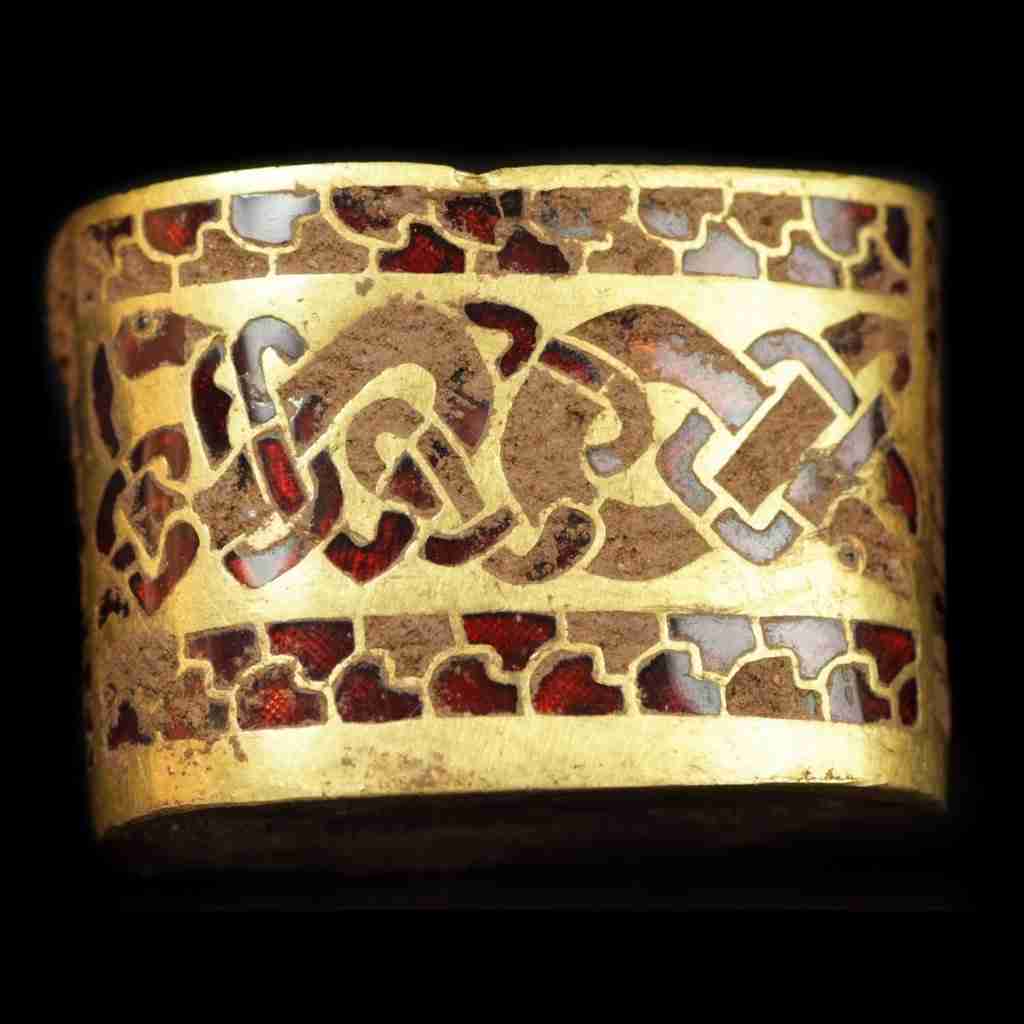
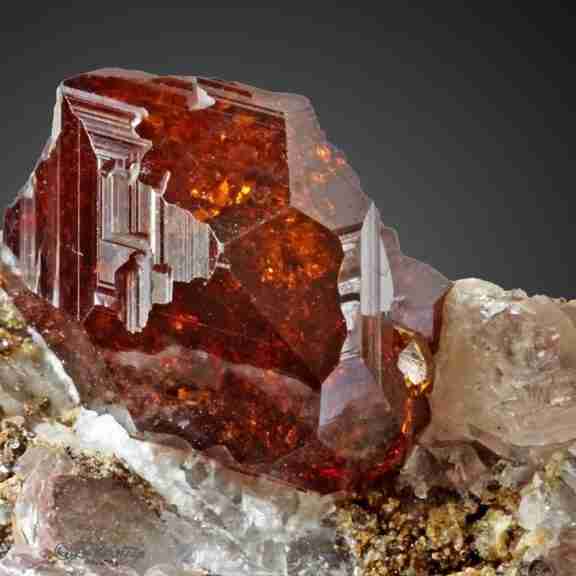
Garnets are one of my favourite stones. They’re such a deep red colour, it can be difficult to appreciate them until you get up close and see them interact with light.
In the 12th century, when most scholarly voices were male, Hildegard of Bingen was an abbess, visionary, composer – and a writer of lapidaries. She led her own community of nuns, advised emperors and popes, and wrote on medicine, botany, and the virtues, uses and meaning of stones. In her Physica, she describes garnet as a stone that strengthens the heart and blood, urging it be worn close to the skin so its “warmth” could fortify the wearer.
In medieval thought, the heart was more than an organ (we still do!) it was the seat of courage, vitality, and moral will. To “cheer the heart” was to embolden the spirit, to make a person fit for the road ahead. That’s why garnet appears in other lapidaries, like those of Marbode of Rennes and Alfonso X, as a protector of travellers: a deep‑red talisman to carry with you between places, guarding your resolve as much as your body.
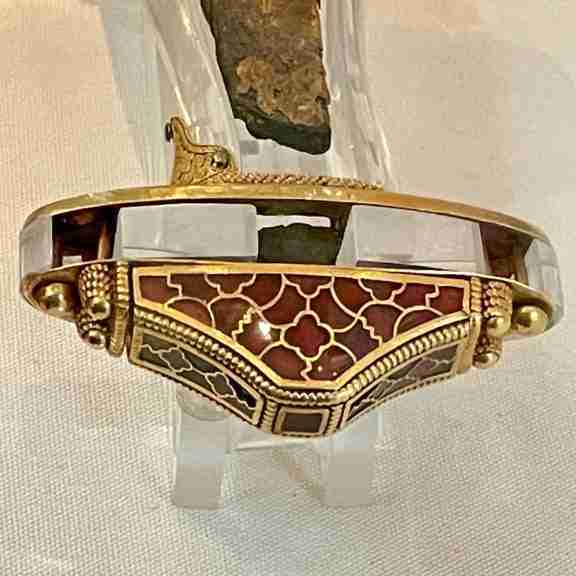
From here, the garnet’s story moves through Anglo‑Saxon sword hilts, long‑distance trade routes, and the quiet constancy that has kept it in jewellers’ hands for over a thousand years… Across early medieval Europe, garnet travelled astonishing distances. In Britain, it blazed from the gold cloisonné of Anglo‑Saxon sword hilts, brooches, and fittings — thin slices of almandine set over patterned gold foil so they glowed like embers. Scientific analysis shows many of these stones came from as far as India or Sri Lanka, others from European deposits, moving along trade routes that stitched together kingdoms and cultures. A warrior’s sword pommel or a traveller’s brooch might carry a stone that had crossed continents before it ever crossed a battlefield.
So why is this beautiful stone – revered in antiquity as something seriously special – so underrated?
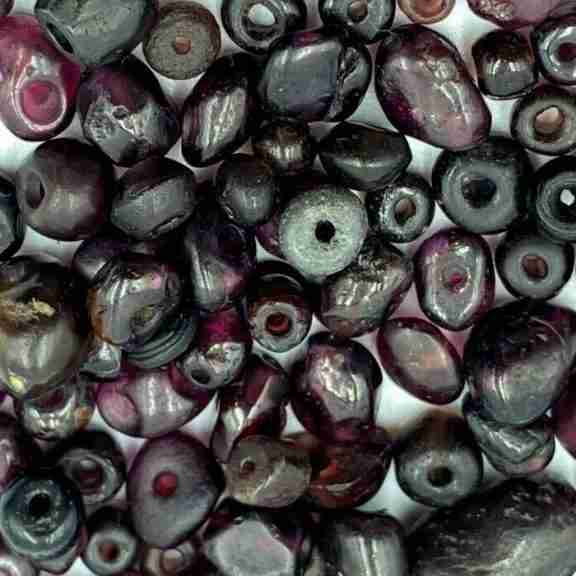
Perhaps garnet’s problem is that it’s a bit too shy. There is gorgeous Garnet, just getting on with it, being part of a beaded necklace to be your travelling companion.
It’s not like a gemstone influencer, all sparkly diamonds and red carpet events. It doesn’t have the marketing machine and PR of other glamstones.
Instead, it works quietly — a deep‑red treasure that has been carried in pockets, embedded into sword hilts, and set into rings for over a thousand years.
In the medieval mind, Garnet was never about ostentatious pagentry, but in constancy. This is the stone that gladdens the heart, strengthens resolve, and sees you safely there and back again.
That’s a different kind of prestige — one measured not in carats, but in the miles and years it has travelled with you.
Today, garnet still offers that same quiet companionship. Whether you wear it for its history, its colour, or the courage it’s said to lend, it’s a jewel that doesn’t need to prove itself. It already has — in the hands of warriors, pilgrims, lovers, and lapidary writers like Hildegard, who knew the value of a strong heart on the road ahead.

Thanks for reading my little blog post. If you’d like to find out more about me, my work, and the stories behind each piece, you’re always welcome to explore the rest of Stuff By Rox. You’ll find jewellery, gems, and a few unexpected treasures along the way. And if you’d like to say hello in person, keep an eye on my events page – I’d love for you to pop by, say hello, and see the sparkle up close.
